6-Piece Comedone Extractor Kit: Safer Blackhead Removal
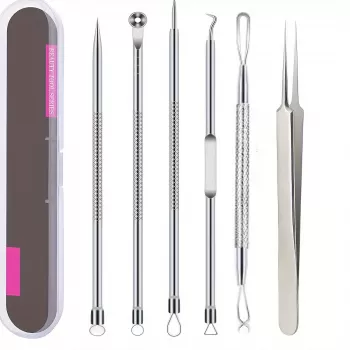
6-Piece Acne and Blackhead Removal Tool Set: Safer, Cleaner Extractions at Home
A comedone extractor set can help remove blackheads and some whiteheads with more control than fingernails—when it’s used gently, on the right blemishes, and with proper cleaning. This guide breaks down what each tool is for, how to prep skin, how to extract without unnecessary trauma, and how to sanitize and store the set for repeat use.
What This 6-Piece Set Is Designed to Do
Extraction tools are meant to make targeted, surface-level congestion easier to remove—without the rough pinching and nail pressure that often triggers irritation.
- Targets surface-level congestion: blackheads (open comedones) and some ready-to-extract whiteheads (closed comedones that have come to a head).
- Helps reduce skin damage vs. squeezing with nails, which can introduce bacteria and cause deeper inflammation.
- Best for small, visible plugs; not intended for cystic acne, deep painful bumps, or widespread inflamed breakouts.
- Consistency matters: proper prep, minimal pressure, and post-care typically make a bigger difference than force.
For ongoing acne concerns, it can also help to review general care guidance from the American Academy of Dermatology Association and symptom/treatment overviews from Mayo Clinic.
Tool-by-Tool: Common Tips for a 6-Piece Extractor Kit
Most 6-piece kits include a few loop sizes and shapes so you can match the tip to the pore location and the size of the plug.
- Loop extractors (round/oval loops): used to press around a blackhead or whitehead head to guide the plug out through the pore opening.
- Angled loop extractors: useful around curved areas like the nose where a straight loop doesn’t sit flat.
- Lance/needle tip (if included): meant to gently open a very thin surface layer on a “ripe” whitehead; avoid digging or widening pores.
- Spoon/flat-ended tools (if included): can help stabilize skin or apply controlled pressure in tight areas.
- Rule of thumb: if the tool doesn’t sit flush against skin, switch tips rather than increasing pressure.
When to Use an Extractor (and When Not To)
Picking the right moment is the difference between a clean release and a sore mark that lingers.
- Good candidates: visible blackheads on nose/chin, whiteheads with a clear head, and clogged pores that are close to the surface.
- Avoid: cysts, nodules, painful red bumps, areas with broken skin, active cold sores, or any lesion that bleeds easily.
- Stop if: sharp pain, significant redness spreading, repeated attempts on the same pore, or any bleeding beyond a pinpoint.
- If breakouts are frequent or severe, a dermatologist-guided plan is safer than repeated mechanical extraction.
Prep Routine: Make Extraction Easier and Gentler
A few minutes of prep can make the plug release with far less pressure.
- Wash hands and cleanse the face with a gentle cleanser; pat dry. (If you need a refresher on technique, the CDC handwashing guide is a solid reference.)
- Soften the area: a warm (not hot) compress for 5–10 minutes can help loosen plugs.
- Disinfect tools before touching skin (even if they were previously cleaned).
- Use a bright light and a mirror; rushing increases the odds of bruising or broken capillaries.
Step-by-Step: How to Remove a Blackhead With a Loop Tool
Step-by-Step: How to Handle a Whitehead (Only When It’s Ready)
Cleaning, Disinfection, and Storage (Don’t Skip This)
| Step | What to do | Why it matters |
|---|---|---|
| Before use | Cleanse skin; disinfect tools with 70% isopropyl alcohol | Reduces bacteria and lowers irritation risk |
| During use | Wipe tips between pores; use minimal pressure | Prevents spreading debris and over-trauma |
| After use | Wash with soap and water; disinfect again; air-dry | Removes oil + sanitizes for next time |
| Storage | Keep dry in a case/pouch | Prevents rust, residue buildup, and contamination |
Aftercare: Calm Skin and Protect the Barrier
Common Mistakes That Cause Marks and Scars
Product Snapshot and What to Expect
If you want a basic, low-cost starter kit for occasional spot extractions, the 6-Piece Acne and Blackhead Removal Tool Set is designed to give you multiple tip shapes for common areas like the nose and chin. It’s best paired with a simple prevention routine (gentle cleansing, non-comedogenic moisturizer, and dermatologist-appropriate acne care) so you’re not relying on extraction alone.
| Item | Details |
|---|---|
| Product | 6-Piece Acne and Blackhead Removal Tool Set |
| Price | 2.51 USD |
| Availability | In stock |
| Best for | Blackheads and select whiteheads |
Helpful add-ons for an acne-conscious routine
- Break the Tension: Stress Relief Techniques (simple breathing and grounding routines that can support healthier habits when stress is high).
- Build Unshakable Confidence for Dating in 5 Days (audio-focused coaching for confidence and communication—useful if breakouts have been affecting self-image).
FAQ
Do blackhead removal tools make pores bigger?
Pores don’t permanently “open,” but repeated trauma and inflammation can make them look larger over time. Using minimal pressure, limiting attempts to 1–2 per pore, and calming skin afterward helps reduce swelling and the appearance of stretched pores.
How often can an extractor tool be used?
Occasional spot use is the safer approach rather than daily extraction. If you notice lingering redness, tenderness, or flaking, pause for at least a week and focus on prevention so the skin barrier can recover.
What’s the safest way to sanitize acne extraction tools at home?
Wash tools first with soap and warm water to remove oils and debris, then disinfect with 70% isopropyl alcohol and let them fully air-dry. Store them in a clean, dry case, and don’t share tools between people.










Leave a comment