Sleep Reset: 7-Day Guided Audio for Better Sleep

Sleep Reset: 7 Days of Guided Audio for Restful Nights
Falling asleep faster, staying asleep, and waking up feeling restored often comes down to how smoothly your mind and body “power down” at night. Sleep Reset is a 7-day guided audio course built around sleep meditation and deep relaxation to help quiet nighttime overthinking, loosen physical tension, and create a steadier wind-down routine—especially on the evenings when insomnia symptoms flare up.
What Sleep Reset Is Designed to Do
Sleep Reset is structured like a short, repeatable training week for your bedtime routine. Instead of hoping you’ll feel sleepy at the right time, it gives you the same calming pathway night after night, which can make the transition into sleep feel less effortful.
- Provides a structured 7-day sequence of guided audio sessions focused on relaxation and sleep readiness
- Supports a calmer pre-sleep state by guiding attention away from rumination and into a steady, soothing focus
- Builds consistency: repeating a similar bedtime pathway can make it easier to transition into sleep over time
- Fits into common sleep challenges: difficulty falling asleep, stress-related wakefulness, and racing thoughts
Who This Course Tends to Help Most
This kind of guided sleep audio is often a good match for people who don’t necessarily need more “willpower” at bedtime—just a simpler off-ramp from the day.
- People who feel “tired but wired” at bedtime and struggle to mentally switch off
- Light sleepers who benefit from a predictable wind-down cue each night
- Anyone building better sleep habits who wants guided support rather than silent meditation
- Those who prefer a non-pharmaceutical, routine-based approach alongside healthy sleep practices
- Shift workers or irregular schedules (with adjustments to timing and light exposure)
How Guided Sleep Audio Works (In Plain Terms)
Guided audio helps by making relaxation more “doable” when your brain is noisy. You’re not trying to force sleep; you’re following cues that support a calmer state where sleep is more likely.
- Attention anchoring: focusing on voice cues, breath, or body sensations can reduce spiraling thoughts
- Physiological settling: slow breathing and progressive relaxation can lower arousal and muscle tension
- Conditioning effect: repeating the same wind-down pattern can teach the body that it’s time to sleep
- Gentle re-direction: if the mind wanders, prompts guide it back without creating performance pressure
For more background on sleep difficulties and common contributors, see the National Heart, Lung, and Blood Institute’s overview of insomnia and the CDC’s hub on sleep and sleep disorders.
7-Day Flow: What a Week Can Look Like
A week with Sleep Reset is meant to feel simple: same general timing, similar setup, and a steadily familiar cue that signals “bedtime starts now.” Progress can be uneven—one good night doesn’t guarantee the next, and a rough night doesn’t erase the work you’re putting in. Consistency matters more than perfection.
- Days 1–2: establish the bedtime ritual (same time, same setup, same audio cue)
- Days 3–4: deepen relaxation skills (body scan, breath pacing, releasing jaw/shoulders/hips)
- Days 5–6: address nighttime mental noise (worry parking, observing thoughts without engaging)
- Day 7: consolidate the routine and choose a sustainable long-term cadence
Simple 7-Day Setup Guide
| Day | Main Focus | Best Time to Listen | Helpful Add-On |
|---|---|---|---|
| 1 | Start the wind-down cue | Lights out or 10–20 minutes before bed | Dim lights; put phone on Do Not Disturb |
| 2 | Relax the body | At bedtime | Warm shower 60–90 minutes before sleep |
| 3 | Settle the breath | At bedtime | Slow exhale focus (longer exhale than inhale) |
| 4 | Reduce racing thoughts | At bedtime or after a nighttime wake-up | Keep a notepad for quick “tomorrow list” |
| 5 | Release tension loops | At bedtime | Gentle stretch: neck/shoulders/hips |
| 6 | Stay asleep support | If waking during the night | Avoid checking the time |
| 7 | Make it sustainable | Choose your repeat nights | Pick 2–4 sessions to rotate weekly |
How to Get Better Results From the Audio
Small setup choices can make guided sleep audio feel more effective—mostly because they reduce friction and stimulation at the exact moment you want your nervous system to settle.
If you want a deeper look at sleep habits and sleep hygiene basics, the American Academy of Sleep Medicine’s Sleep Education site is a helpful reference.
When to Be Cautious and When to Get Extra Support
Related Tools for Stress and Daily Reset
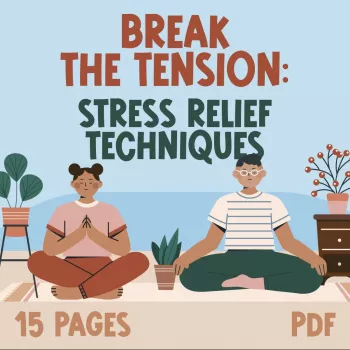
- Break the Tension: Stress Relief Techniques – Breathing Exercises, Quick Meditations, Grounding Techniques, and Time Management Tips to Reduce Stress for quick routines that reduce stress before bedtime.
- 5-Minute Reset for Exhausted Parents (3 in 1) | Audio Course | Mindfulness Breathing, Emotional Reset & Energy Boost for nights when you reach bedtime already depleted.
Sleep Reset at a Glance
FAQ
Can this be used if waking up in the middle of the night is the main issue?
Yes—use a session (or the most calming track) after waking, keep lights low, and avoid checking the time so your brain doesn’t shift into “problem-solving mode.” Treat the audio as a cue to return to a restful state, even if you don’t fall asleep immediately.
How long does it take to notice improvement?
Some people feel calmer the first night, while steadier sleep often improves over 1–2 weeks of consistent use. The biggest gains usually come from repeating the same wind-down routine rather than chasing perfect nights.
Is guided sleep meditation safe to use every night?
Generally yes for most people, especially when volume stays low and the session is used only during rest time. If symptoms feel severe, anxiety spikes during relaxation, or there are signs of sleep apnea (snoring/gasping/pauses in breathing), it’s worth getting medical guidance.









Leave a comment