7-in-1 EMS + LED Face Massager: Lift, Depuff, Glow
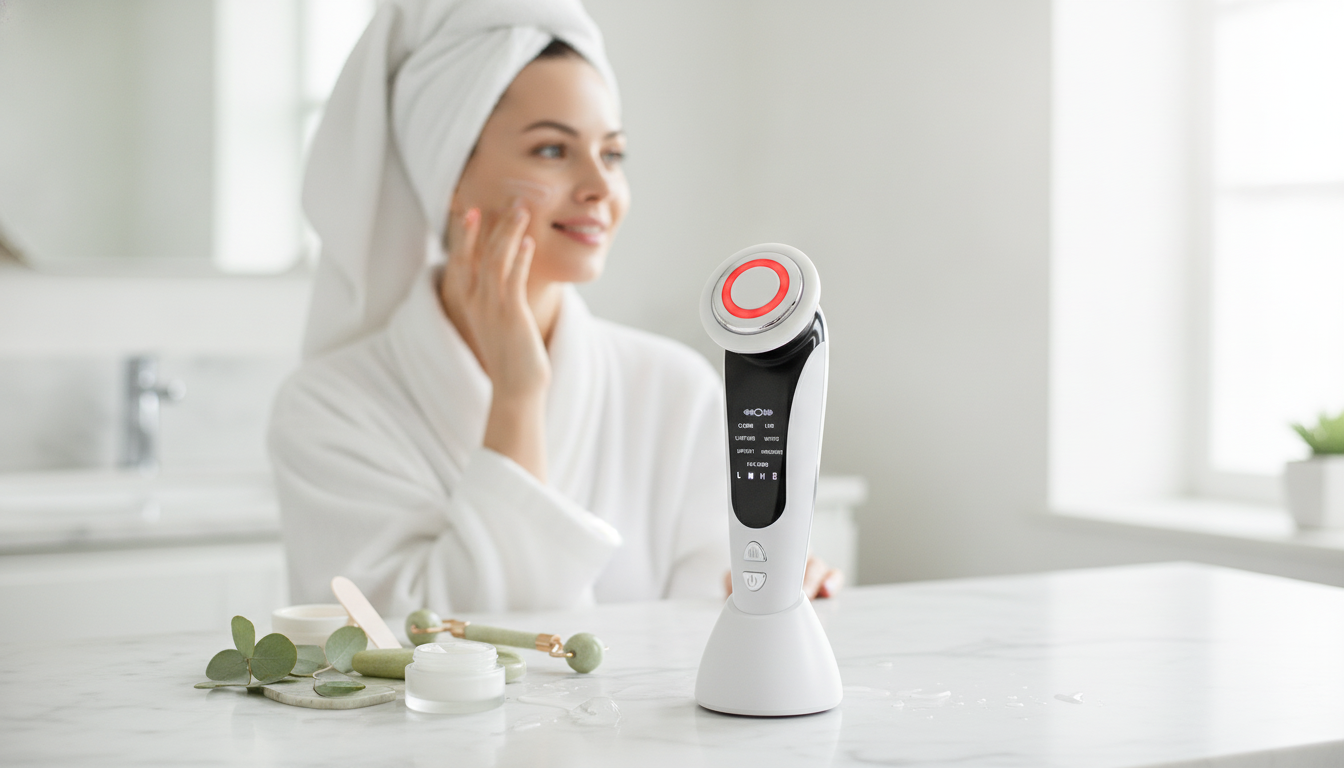
7-in-1 EMS Face Lifting & LED Skin Rejuvenation Massager: At-Home Firming and Glow Routine
A multi-function facial tool can simplify a skincare routine by pairing gentle electrical stimulation with light therapy and warming or vibrating massage. This guide explains what to expect from a 7-in-1 EMS face lifting and LED rejuvenation device, how to use it safely, and how to build a consistent routine for smoother-looking, more refreshed skin. For more guidance, see Development of Home Beauty Devices for Facial Rejuvenation – PMC.
What a 7-in-1 facial massager is designed to do
A “7-in-1” face tool typically combines multiple modes so you can tailor each session to how your skin feels that day—de-puffing in the morning, firming before an event, or a calming light session at night. For further reading, see Does Red Light Therapy Really Work on Wrinkles? – AARP.
- Supports the look of firmness by using mild electrical pulses (EMS) that stimulate facial muscles and create a “toned” feel after use.
- Uses LED light to complement skincare goals like a brighter-looking tone and calmer-looking redness (results vary by wavelength and consistency).
- Adds massage (often vibration) and/or warmth to help products glide, encourage a relaxed facial feel, and reduce the look of puffiness for some users.
- Works best as a routine tool: short sessions several times per week tend to be more noticeable than occasional long sessions.
For an overview of what LED therapy can (and can’t) do in everyday cosmetic routines, the American Academy of Dermatology Association is a helpful reference point.
Core technologies: EMS, LED, heat, and massage
EMS (Electrical Muscle Stimulation)
EMS is usually felt as light tapping or tingling. Comfort is the goal—never “powering through.” If it feels sharp, painful, or like strong pulling, turn the intensity down and add more conductive gel or serum.
LED light therapy
LED modes use different colors (wavelengths) to support different appearance goals. Device strength varies, so progress tends to look gradual and subtle. Consistency matters more than long sessions.
Warming function
A gentle warmth can make the experience feel soothing and may help products spread more evenly. If your skin is sensitive, reactive, sunburned, or irritated, skip heat and stick to cooler, gentler settings.
Vibration/massage
Massage and vibration can feel relaxing and may temporarily reduce the look of swelling—especially around cheeks and jaw—depending on sleep, salt intake, and your baseline puffiness.
| Mode/Feature | Typical goal | Best time to use | Notes for comfort |
|---|---|---|---|
| EMS | Firmer, lifted look | After cleansing with conductive gel/serum | Start low; keep moving to avoid strong pulses in one spot |
| Red LED | Smoother-looking skin, supportive anti-aging care | Evening or after cleansing | Use consistently; avoid staring into LEDs |
| Blue LED | Clearer-looking skin support | When breakouts are a concern | Keep device clean to reduce skin contamination risk |
| Green/Yellow LED (if available) | More even-looking tone and calm appearance | Any time on clean skin | Patch test if skin is reactive |
| Heat + Massage | Relaxation and de-puffing | Morning or pre-event | Skip heat on inflamed or very sensitive skin |
Who it’s best for (and when to skip it)
- Good fit for: people who want a quick, at-home routine to support a fresher look, especially alongside consistent skincare and sunscreen.
- May be helpful for: dull-looking skin, mild puffiness, and the desire for a temporary “snatched” feel along cheeks/jaw after a session.
- Skip or get medical advice first if: pregnant, using a pacemaker or implanted medical device, managing seizure disorders, or under dermatology care for a condition that could be aggravated.
- Avoid using over: broken skin, active rashes, severe irritation, or areas with recent injectables/procedures unless cleared by a clinician.
- If skin feels stinging, burning, or looks increasingly irritated, stop and reassess intensity, product compatibility, and frequency.
If you want broader context on light-based treatments, the Cleveland Clinic’s overview of light therapy can help set expectations.
How to use an EMS + LED face tool for the most comfortable results
Results timeline and what to realistically expect
Cleaning, storage, and longevity
A simple 10-minute routine idea (morning or night)
Shop the routine
- 7-in-1 EMS Face Lifting & LED Skin Rejuvenation Massager (a multi-mode tool for firming feel, LED support, and massage in one device)
- Elegant PU Leather Journal Notebook with Thick Soft Cover & Elastic Strap (helpful for tracking which settings and frequencies your skin likes)
- Elegant Vintage Gold Textured Square Stud Earrings for Women (an easy finishing touch when your skin looks fresh and hydrated)
FAQ
Does EMS for the face hurt?
It should feel like mild tingling or tapping. Start at the lowest intensity, keep the head moving, and use a conductive gel/serum. Pain, burning, or strong pulling is a sign to stop and reassess settings and skin prep.
How often can an LED facial massager be used?
Many routines start at 3–5 times per week with short sessions. If dryness or sensitivity appears, reduce frequency and avoid pairing with strong exfoliating acids the same day.
Can it be used with retinol or acids?
It’s often better to separate tool use from stronger actives if skin is reactive. Use a simple, non-irritating conductive gel during the session, then return to retinoids/acids on alternate nights as tolerated.










Leave a comment