More Time, Less Stress: Pomodoro, Matrix & Time Blocking
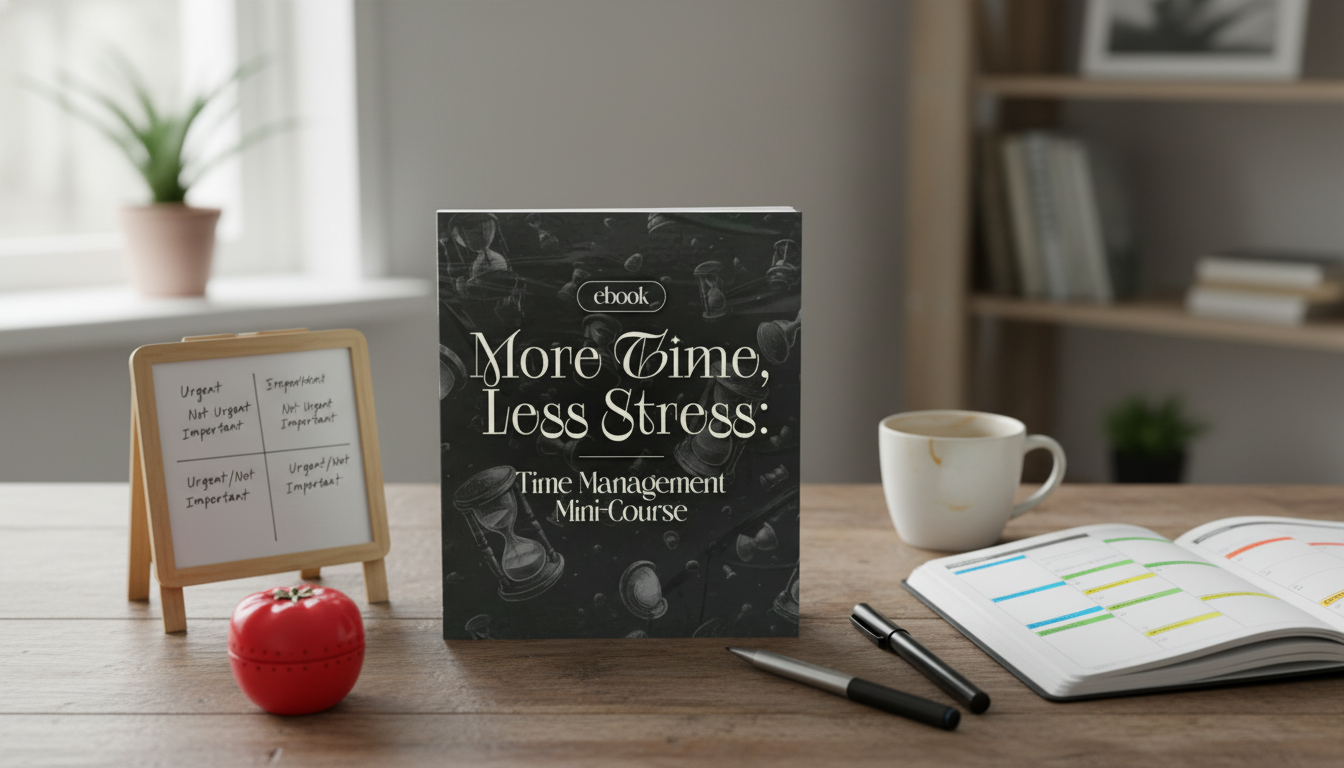
More Time, Less Stress: A Practical Mini-Course for Pomodoro, Eisenhower Matrix, and Time Blocking
Days get packed fast: urgent messages, scattered tasks, and the feeling of being busy without making real progress. A calmer approach isn’t about squeezing more into every hour—it’s about using a simple system to prioritize what matters, protect focused work time, and build repeatable routines. This mini-course + ebook centers on three tools that work especially well together: Pomodoro focus sprints, the Eisenhower Matrix, and time blocking.
When stress stays high for long stretches, it can affect both mind and body—sleep, mood, and energy often take the hit first. The American Psychological Association outlines several ways stress shows up physically, which is one reason a “less chaotic” workflow can feel like real relief—not just better productivity.
Who this mini-course is for
- People juggling multiple responsibilities who need a clear way to decide what to do next
- Anyone who starts tasks but struggles to finish due to interruptions or low focus
- Busy professionals and students who want a weekly plan that doesn’t collapse by Wednesday
- Parents and caregivers who need flexible routines and short, reliable work sprints
The core idea: reduce decisions, increase follow-through
Most “time management problems” aren’t really about time—they’re about decision fatigue and attention drain. The system here is designed to make the next move obvious.
- Use one place to capture tasks so nothing lives only in memory
- Choose priorities with a fast filter (urgent vs. important) before scheduling
- Convert priorities into protected blocks of time rather than endless to-do lists
- Work in short cycles to lower resistance and build momentum
Pomodoro: a focus sprint that prevents burnout
The Pomodoro Technique is simple: pick one task, set a timer, work with full attention, then take a short break. The power comes from how it reduces “starting friction” and keeps your brain from trying to do everything at once. The original approach is well documented by the Cirillo Company.
- Start with a single task, a timer, and a clear finish line for the session
- Use a short break to reset attention before starting the next sprint
- Batch small tasks into one Pomodoro to avoid constant context switching
- Adjust the cycle length when needed (for deep work, admin tasks, or low-energy days)
- Track completed Pomodoros to estimate future work more accurately
Pomodoro variations for common situations
| Situation | Suggested cycle | Why it helps |
|---|---|---|
| Deep work (writing, coding, studying) | 25/5 or 50/10 | Long enough to get immersed; breaks protect stamina |
| Admin tasks (email, scheduling) | 15/3 or 25/5 | Prevents inbox sprawl and keeps tasks contained |
| Low-energy day | 10/2 repeated | Lowers friction and builds a quick win streak |
| Frequent interruptions | 2×15/3 with a buffer | Shorter sprints make it easier to restart after disruptions |
Eisenhower Matrix: stop treating every task like an emergency
If everything feels urgent, it’s easy to default to whatever is loudest. The Eisenhower Matrix gives a quick way to sort tasks by urgency and importance so your calendar reflects outcomes—not just demands. A practical overview is available from MindTools.
- Important + urgent: do first (today’s true priorities)
- Important + not urgent: schedule (the work that changes outcomes)
- Not important + urgent: delegate or limit (reduce reactive workload)
- Not important + not urgent: delete or defer (protect time and attention)
- Use the matrix weekly to prevent “urgent” tasks from consuming the whole calendar
Time blocking: turn priorities into a realistic week
Time blocking is where the system becomes real. Instead of hoping you “get to” important work, you assign it a protected slot. The best plans also accept reality: energy changes, tasks overrun, and unexpected needs happen. That’s why buffers and recurring blocks matter.
Example day using matrix + time blocks + Pomodoro
| Time | Block | Method |
|---|---|---|
| 9:00–9:15 | Plan + choose top outcomes | Eisenhower Matrix + quick scheduling |
| 9:15–10:45 | Priority project work | 3× Pomodoro (25/5) |
| 10:45–11:15 | Messages + quick admin | Single timed block (no multitasking) |
| 11:15–12:00 | Meetings or collaboration | Agenda + hard stop |
| 1:00–2:00 | Important not urgent task | Time block (deep work) |
| 2:00–2:30 | Buffer + catch-up | Protects the rest of the day |
| 2:30–3:30 | Small tasks batch | 2× Pomodoro or one focused block |
| 3:30–3:45 | Shutdown routine | Review, capture, set first task for tomorrow |
A simple weekly setup that stays stable
What’s included in the mini-course + ebook
- More Time, Less Stress: Time Management Mini-Course – Productivity Ebook with Pomodoro, Eisenhower Matrix & Time Blocking Strategies
- Break the Tension: Stress Relief Techniques – Breathing Exercises, Quick Meditations, Grounding Techniques, and Time Management Tips to Reduce Stress
- 5-Minute Reset for Exhausted Parents (3 in 1) | Audio Course | Mindfulness Breathing, Emotional Reset & Energy Boost
Pairing it with stress relief habits (when time pressure is high)
FAQ
How long does it take to see results from Pomodoro and time blocking?
Start with one weekly review, block 1–2 priority sessions per day, and track completed focus sprints. Better follow-through often shows up within days, with noticeably steadier weeks in about 2–3 weeks.
What if the schedule keeps getting interrupted?
Add buffers, use shorter focus sprints, and keep one daily “catch-up” block to absorb spillover. A simple restart ritual—write the next tiny action, set the timer, and resume—helps protect progress even when the calendar isn’t perfect.
Is the Eisenhower Matrix still useful if everything feels urgent?
Yes—use it to validate what’s truly time-sensitive, set real deadlines, and identify the few outcomes that actually matter. Shrink the “urgent” pile by delegating, automating, or time-limiting reactive tasks, then schedule important-not-urgent work first.











Leave a comment