Anxiety Relief Bundle: 4-in-1 Calm Routine That Sticks
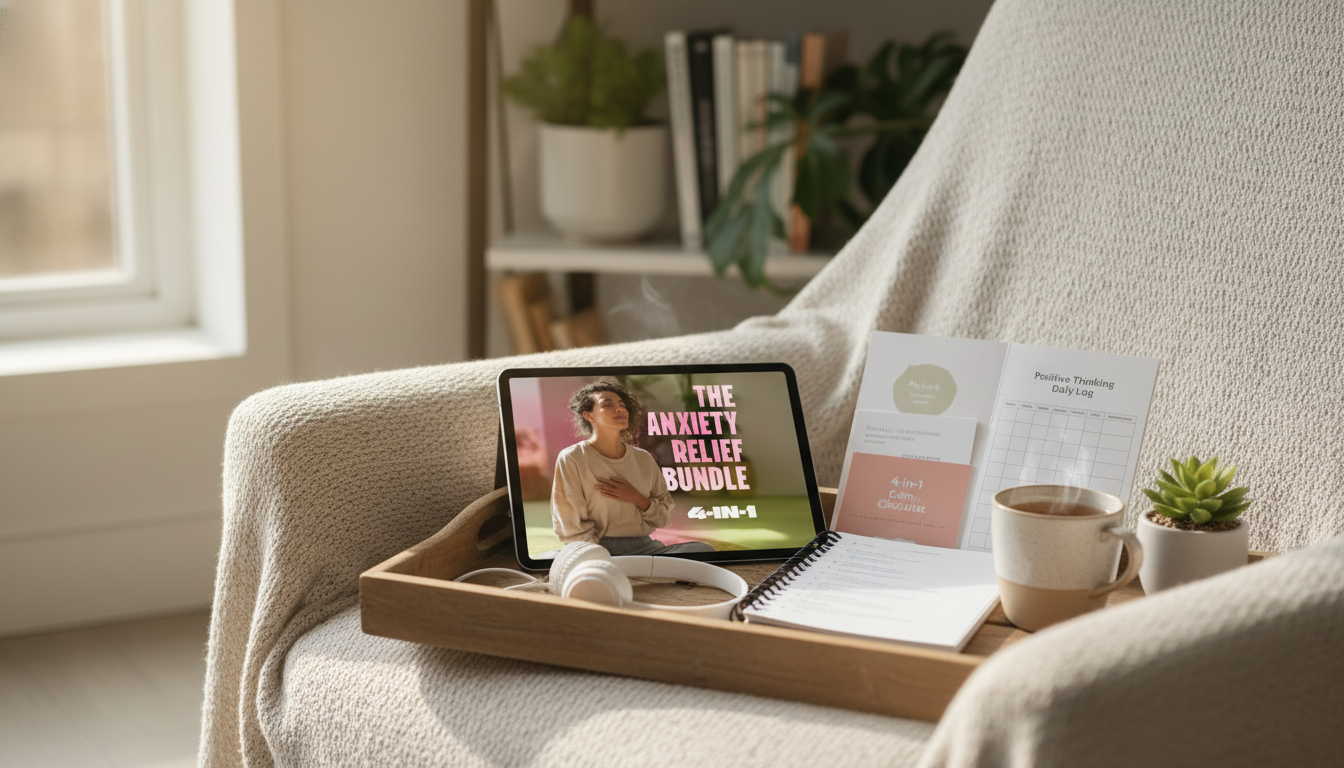
The Anxiety Relief Bundle: A Path to Calm — A 4-in-1 Routine for Mindfulness, Positive Thinking, and Daily Check-Ins
Anxiety can make even simple days feel unpredictable. A structured toolkit can help create small moments of steadiness—especially when it combines guided exercises, realistic mindset shifts, and practical prompts to stay consistent. This bundle brings four complementary parts together to support calmer days and clearer next steps.
Mindfulness-based practices are widely used for stress reduction, and major health organizations note that anxiety disorders are common and treatable with the right support and strategies. For background reading, see NIMH — Anxiety Disorders and the APA overview of mindfulness meditation and stress.
What this 4-in-1 bundle includes
The The Anxiety Relief Bundle: A Path to Calm (4-in-1 Bundle) is designed for real life: short practices, simple prompts, and a clear structure that reduces the “What should I do next?” feeling. Each piece supports the others, so it’s easier to build a routine that feels doable rather than demanding.
- Mindfulness exercises designed to reduce mental noise and return attention to the present moment
- Positive thinking tools focused on reframing patterns without forcing unrealistic optimism
- A printable checklist to support daily tracking, habit-building, and gentle accountability
- A course outline that provides a step-by-step sequence to reduce overwhelm and keep progress organized
- Works well as a flexible routine: use one component per day or combine them into a weekly plan
Quick map of the bundle components
| Component | Primary purpose | Best time to use | Typical time needed |
|---|---|---|---|
| Mindfulness exercises | Ground attention and reduce spiraling thoughts | Morning, midday reset, or before bed | 5–15 minutes |
| Positive thinking prompts | Challenge unhelpful thoughts and build balanced perspectives | After a trigger or during journaling time | 5–10 minutes |
| Printable checklist | Stay consistent with small actions and track what helps | Daily planning or evening review | 2–5 minutes |
| Course outline | Create a clear progression so the process feels manageable | Weekly planning or structured learning blocks | 15–30 minutes |
Who it’s most helpful for
This type of bundle fits especially well when anxiety shows up as mental “static,” second-guessing, or difficulty staying consistent with coping habits. Instead of relying on motivation, it leans on structure and small repeats.
- People who want a guided structure rather than trying random techniques each day
- Anyone who benefits from written prompts, checklists, and clear next steps
- Those managing stress from work, school, parenting, or life transitions
- Beginners who want an approachable starting point for mindfulness
- Individuals who prefer short practices that can fit into real schedules
A simple way to use it: a 7-day calm-building rhythm
Consistency tends to work better than intensity. This gentle 7-day rhythm builds familiarity first, then adds tools in a way that feels organized—without turning self-care into another performance metric.
- Day 1: Choose one mindfulness exercise and repeat it twice to learn the feel of it
- Day 2: Add the printable checklist and track triggers, sleep, and one supportive habit
- Day 3: Use a positive thinking prompt to reframe a recurring worry into a balanced statement
- Day 4: Practice a short mindfulness reset during a stressful moment (not only when calm)
- Day 5: Review checklist patterns—identify one thing that reliably helps (even slightly)
- Day 6: Follow the course outline sequence to focus on one skill area rather than multitasking tools
- Day 7: Create a “minimum routine” (5 minutes) for busy days and a “full routine” (15–20 minutes) for easier days
If your schedule is packed, pairing the bundle with a short guided option can make follow-through easier. The 5-Minute Reset for Exhausted Parents (Audio Course) works well as a quick “bridge” when you need support but don’t have the bandwidth to plan your next step.
How mindfulness and thought tools can work together
Mindfulness and thought reframing often get treated as separate approaches, but they can be more effective as a sequence: first notice, then respond. The key is avoiding the trap of trying to “win” an argument with anxiety while you’re still activated.
For many people, a “micro-reset” in the body (breathing, grounding, muscle release) makes the mindset tools easier to use. If physical symptoms are a big piece of your stress response, consider adding Break the Tension: Stress Relief Techniques alongside the bundle for more focused breathing and grounding options.
Practical tips to get better results (without adding pressure)
When to consider an add-on resource
- If anxiety spikes show up as physical tension or racing breath, add a focused breathing/grounding set like Break the Tension: Stress Relief Techniques
- If time is the biggest barrier, consider short audio-based resets such as 5-Minute Reset for Exhausted Parents (Audio Course)
- If stress is tied to workload or planning overwhelm, combine calming tools with simple time-blocking and priority-setting (keep it lightweight to avoid adding pressure)
FAQ
Is this bundle suitable for beginners to mindfulness?
Yes. It’s designed to be approachable, and it works well when you start with one short mindfulness exercise plus the printable checklist to create simple daily structure.
How quickly can a routine like this help with anxiety?
Some people feel a shift after a single practice, especially with grounding or breathing. More lasting change usually comes from consistent use over a few weeks, and tracking what helps makes progress easier to notice.
Can the printable checklist be used daily without feeling overwhelming?
It can—keep it minimal by checking only a few items and using quick check-ins. Treat it as supportive feedback (what helped, what didn’t) rather than a pass/fail task.








Leave a comment