Black Mesh Desk Organizer: 3 Compartments + Pencil Holder
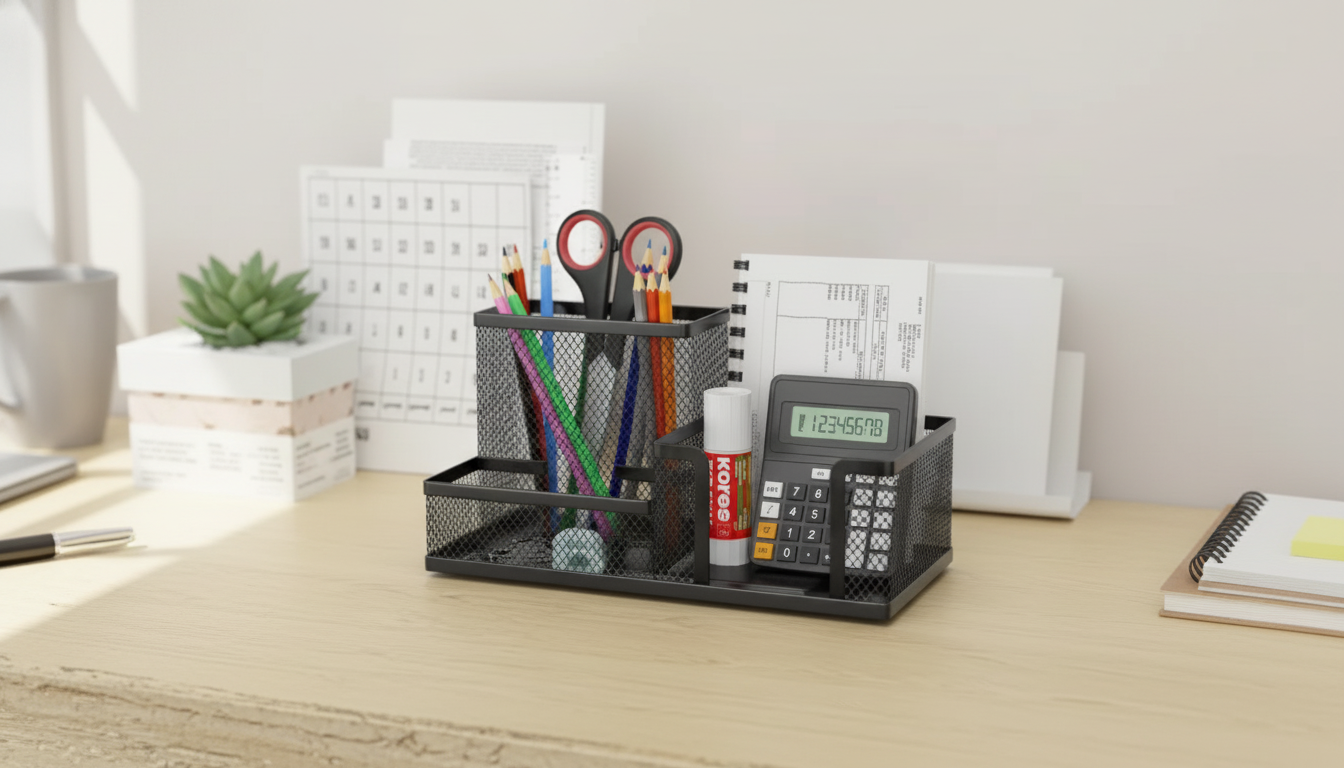
Mesh Desk Organizer with 3 Compartments & Pencil Holder – Black
A tidy workspace makes everyday tasks faster and less frustrating. This black mesh desk organizer is designed to keep pens, pencils, scissors, markers, sticky notes, and small office tools sorted in separate sections, while the open mesh construction keeps everything visible and easy to grab. If your desk tends to collect “just one more” item until it feels crowded, a compact organizer like this can restore clear space without adding bulky storage.
For a simple, budget-friendly way to reset your desktop, see the Mesh Desk Organizer with 3 Compartments & Pencil Holder – Black (in stock).
What This Organizer Solves on a Busy Desk
- Reduces time spent searching for frequently used items by giving each tool a consistent home.
- Keeps writing instruments upright to prevent rolling and clutter spread.
- Creates quick-drop zones for small items like paper clips, erasers, and USB drives.
- Helps maintain a clean visual surface for notebooks, keyboards, and mouse space.
When pens and small tools drift around the desk, the real cost is the constant micro-interruption: you pause, scan, move papers, then finally find what you need. A multi-compartment organizer limits that “search loop” and makes it easier to keep your main work area open—especially helpful if you’re trying to keep a neutral wrist position and reduce awkward reaches across your keyboard. For general workstation setup guidance, the ergonomics resources from NIOSH and Cornell University Ergonomics are practical references.
Layout: 3 Compartments Plus Pencil Holder
- Three main compartments support simple sorting (daily-use pens, highlighters/markers, scissors/ruler).
- Dedicated pencil holder area keeps sharpened points and pen tips protected and upright.
- Open-top design allows quick access during calls, studying, or note-taking.
- Works as a central station for tools used across work, school, and crafting.
The easiest organizers to maintain are the ones that don’t require “perfect” habits. Three compartments plus a pencil holder give you enough structure to separate categories without overthinking it. A low-effort system that stays tidy looks like this:
- Compartment 1: everyday pens and a mechanical pencil
- Compartment 2: highlighters, Sharpies, dry-erase markers
- Compartment 3: scissors, small ruler, letter opener
- Pencil holder: sharpened pencils, fine-tip pens, stylus
Because everything is upright and visible, you’re less likely to “double buy” supplies (like discovering three half-working pens) and more likely to return tools to the same place after use.
Mesh Metal Build: Visibility and Everyday Durability
- Mesh sides improve visibility so items don’t disappear into a closed container.
- Metal construction is suitable for frequent use in home offices, classrooms, and reception areas.
- Black finish blends with most desk styles and hides everyday scuffs better than lighter colors.
- Ventilated design can be easier to wipe down compared with textured fabric organizers.
Open mesh is a practical choice when you want quick access and instant inventory. Instead of opening drawers or lifting lids, you can glance once and grab what you need. The black metal look also tends to fit well with common desk setups—laminate, wood, glass, or standing desk tops—without drawing attention away from your monitor or notes.
If your workflow includes frequent writing, labeling, or tool switching (think: shipping labels, checklists, homework sets, or planning boards), the “always visible” aspect matters. It encourages quick resets: once you’re done, you can see where items belong, so putting them back is almost automatic.
Where It Fits Best: Home Office, Student Desk, or Shared Spaces
If your desk doubles as an entertainment space, consider pairing your clean desktop setup with a dedicated viewing zone. For example, a home theater setup can be kept similarly streamlined with a single place for remotes, adapters, and styluses; the 1400 ANSI Lumens 4K Ultra HD Home Theater Projector with WiFi & Dolby Audio is an in-stock option for a living room or media corner.
Simple Setup Ideas for a Cleaner Workflow
Care and Maintenance
Quick Feature Comparison: Mesh Compartments vs Other Organizer Styles
| Organizer type | Best for | Pros | Considerations |
|---|---|---|---|
| Mesh desk organizer with compartments | Fast access to pens and small tools | Visible contents, easy to grab, keeps items upright | Less concealment if a minimalist look is preferred |
| Closed drawer organizer | Hiding clutter and sorting many small items | Clean look, good for small parts | Slower access; drawers can become mixed without labels |
| Rotating caddy | Shared spaces or many writing tools | High capacity; spins to access | Can take more desk footprint; items may crowd together |
| Desktop tray + cup | Light organization with minimal sections | Simple, low-profile | Less structure for separating tools by type |
Product Details and Availability
- Product: Mesh Desk Organizer with 3 Compartments & Pencil Holder – Black
- Price: $4.82 (USD)
- Availability: In stock
- Good fit for keeping essential writing tools and desk accessories organized without adding bulky storage
FAQ
Does a mesh desk organizer scratch a desktop surface?
Most mesh organizers sit flat and are generally desk-friendly, but any item can scuff a delicate finish if it’s dragged around often. If your desktop is easily marked, add a thin desk pad underneath or apply small felt dots to the organizer’s base.
What should go in each compartment to keep it from getting messy again?
Use one compartment for daily pens and pencils, one for markers/highlighters, and one for tools like scissors, a small ruler, or an eraser. Keep the pencil holder for sharpened pencils or fine-tip pens, and reserve one spot as a “return items” slot for things that need to be put away later.
Is the mesh organizer easy to clean if ink or dust builds up?
Yes—wipe it with a soft, slightly damp cloth and dry it thoroughly so the finish stays looking clean. Avoid abrasive pads or harsh cleaners, and clean ink or adhesive residue promptly so it doesn’t become sticky or difficult to remove.












Leave a comment