Eco-Friendly Travel Checklist: Zero-Waste Packing Essentials
Eco-Friendly Traveler Checklist: A Zero-Waste Packing List and Practical Green Travel Tips
Sustainable travel gets simpler when decisions are made before you step out the door. A clear, reusable checklist helps cut waste from last-minute purchases, avoid overpacking, and keep everyday habits consistent on the road. Below is a practical, comfort-friendly approach to packing less, reusing more, and reducing waste across transportation, lodging, and daily routines—without turning your trip into a chore.
What “eco-friendly travel” looks like in practice
Eco-friendly travel isn’t about perfection; it’s about focusing on the few actions that prevent the most waste and emissions.
- Start with the biggest impact areas: how you get there (transport), what you use every day (reusables), and how you handle energy and water at your destination.
- Aim for “less stuff, better stuff”: durable, multipurpose items beat single-use or travel-only gadgets that break quickly.
- Plan for local realities: tap-water safety, refill access, laundry options, climate, and cultural norms all change what “smart packing” looks like.
- Choose low-waste defaults: digital tickets, refillable toiletries, and politely declining freebies that become trash.
For a broader view of sustainable tourism priorities, the UNEP sustainable tourism overview is a helpful reference point.
Zero-waste packing essentials (the core kit)
The best zero-waste travel kit is small enough to actually bring—yet complete enough to prevent daily disposables.
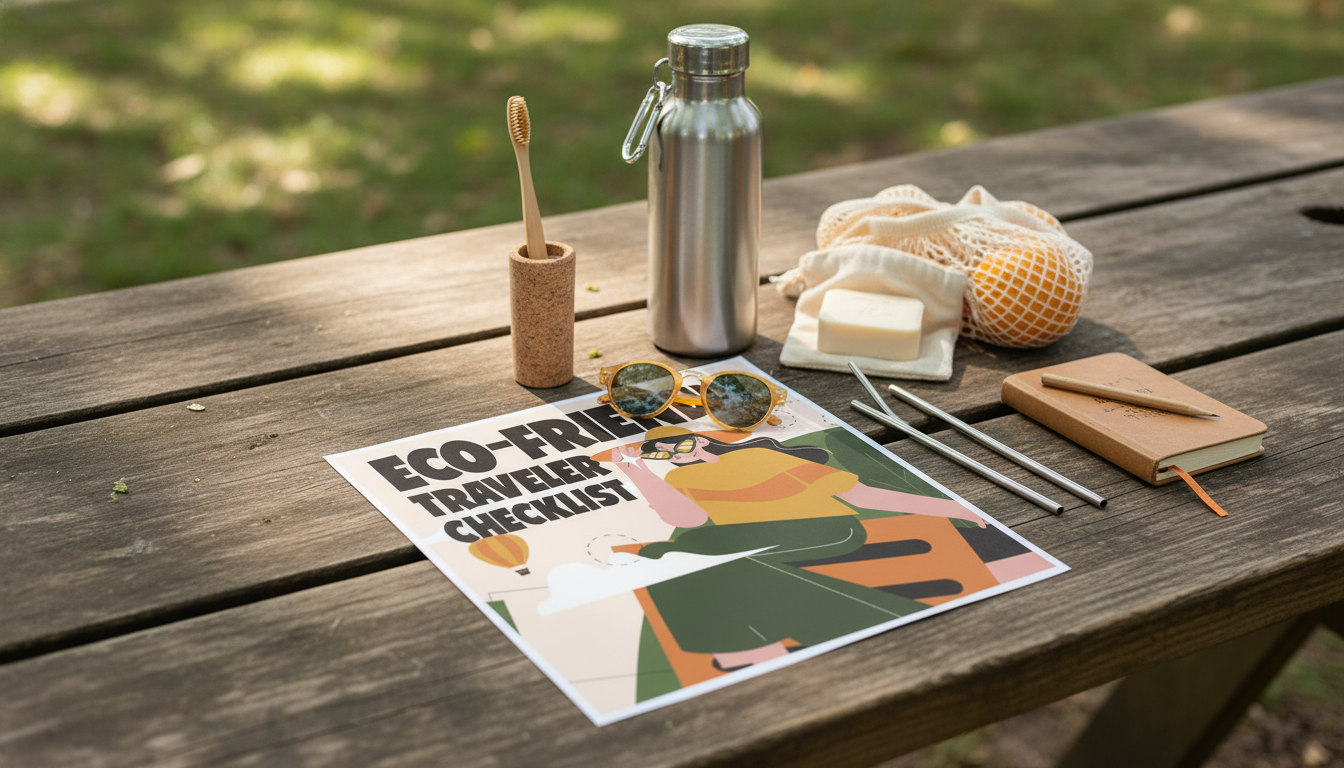
Core reusables
- Water and drinks: an insulated bottle; add a filter/purifier if your destination requires it; a collapsible cup for takeout drinks.
- Food on the go: reusable cutlery; a lightweight container; a reusable snack bag; a cloth napkin or bandana.
- Shopping and extras: a packable tote; a small produce bag; a few washable zip pouches for organization.
- Personal care: solid shampoo/soap bar in a tin; refillable toiletry bottles; bamboo or replaceable-head toothbrush; reef-safe sunscreen when relevant.
- Comfort and durability: quick-dry towel or handkerchief; minimal first-aid basics; repair tape or a mini sewing kit to extend gear life.
Reusable swaps that prevent the most single-use waste
| Disposable item | Reusable alternative | Where it helps most |
|---|---|---|
| Plastic water bottles | Refillable bottle (plus filter if needed) | Airports, day trips, walking tours |
| Takeout cutlery | Reusable cutlery set | Street food, food courts |
| Paper napkins | Cloth napkin/bandana | Meals, spills, quick cleanups |
| Plastic shopping bags | Packable tote/produce bags | Markets, souvenirs, groceries |
| Mini toiletry bottles | Refillable containers or solid bars | Hotels, longer trips, carry-on packing |
Low-waste toiletries and laundry strategies
- Choose concentrated formats: solid bars, powders, or tablets usually reduce packaging and eliminate leak risk.
- Use one “universal” wash option (when appropriate): a gentle soap bar can cover hands/body and sometimes quick laundry needs for short trips.
- Plan laundry to pack fewer clothes: quick-dry fabrics, a small stain remover, and sink-washing lightweight items can shrink your wardrobe dramatically.
- Avoid unnecessary hotel minis: decline “just in case” items at check-in when possible; use what you already packed.
When you’re unsure what to do with packaging or containers on the road, the U.S. EPA Reduce, Reuse, Recycle guidance is a good refresher on prioritizing waste prevention before recycling.
Transport choices that reduce impact
- Choose lower-emission options when feasible: direct routes; rail/bus for regional trips; walking or public transit once you arrive.
- Pack light: less weight can reduce fuel use, and a smaller bag makes buses, trains, and walking far more realistic.
- Extend trip length when possible: fewer flights per year often beats multiple short breaks.
- Use shared mobility thoughtfully: pooled rideshares and car shares can lower per-person emissions compared to solo rides.
If you want a rough estimate for flight emissions when comparing options, the ICAO Carbon Emissions Calculator is a widely used tool.
Staying at hotels or rentals without wasting resources
- Skip daily linen changes: reuse towels and request cleaning only as needed.
- Control energy use: turn off lights and climate control when leaving; keep thermostat changes modest.
- Use refill stations: if your lodging offers bulk toiletries or water refill points, lean on them and ask staff about what’s available.
- Handle waste correctly: learn what’s recyclable locally and avoid “wish-cycling” (putting non-recyclables into recycling bins).
A checklist routine that actually gets used
The most sustainable checklist is the one that survives busy workweeks and early-morning departures.
Printable and digital option for streamlined packing
If you want a reusable, easy-to-save format, consider the Eco-Friendly Traveler Checklist (digital download). Digital downloads are simple to reuse for different trip types, duplicate for family members, and keep accessible offline once saved to your phone.
Travel can also bring a different kind of “waste”: mental overload. For calmer transit days and smoother routines, Break the Tension: Stress Relief Techniques can pair well with your packing plan—helping you stick with your low-waste habits even when plans change.
FAQ
What are the most important items for a zero-waste travel kit?
Start with the highest-payoff basics: a refillable water bottle (plus a filter if your destination needs it), a packable tote, reusable cutlery, a small container, a cloth napkin/bandana, and low-waste toiletries like solid bars. Adjust from there based on refill access and the kind of meals you’ll be buying.
How can packing lighter be more sustainable?
Carrying less can reduce transportation fuel use, cut impulse buys when bags overflow, and make walking or public transit more realistic. A capsule wardrobe with quick-dry pieces also lowers laundry loads and helps you re-wear items comfortably.
Is it okay to recycle while traveling if the local rules are unclear?
When rules aren’t clear, ask lodging staff or check local municipal guidance, and avoid “wish-cycling” items that may contaminate recycling. When in doubt, prioritize reducing and reusing (refill, re-wear, and refuse) over guessing on disposal.










Leave a comment