Homework Help Made Easy: Printable Toolkit for Parents
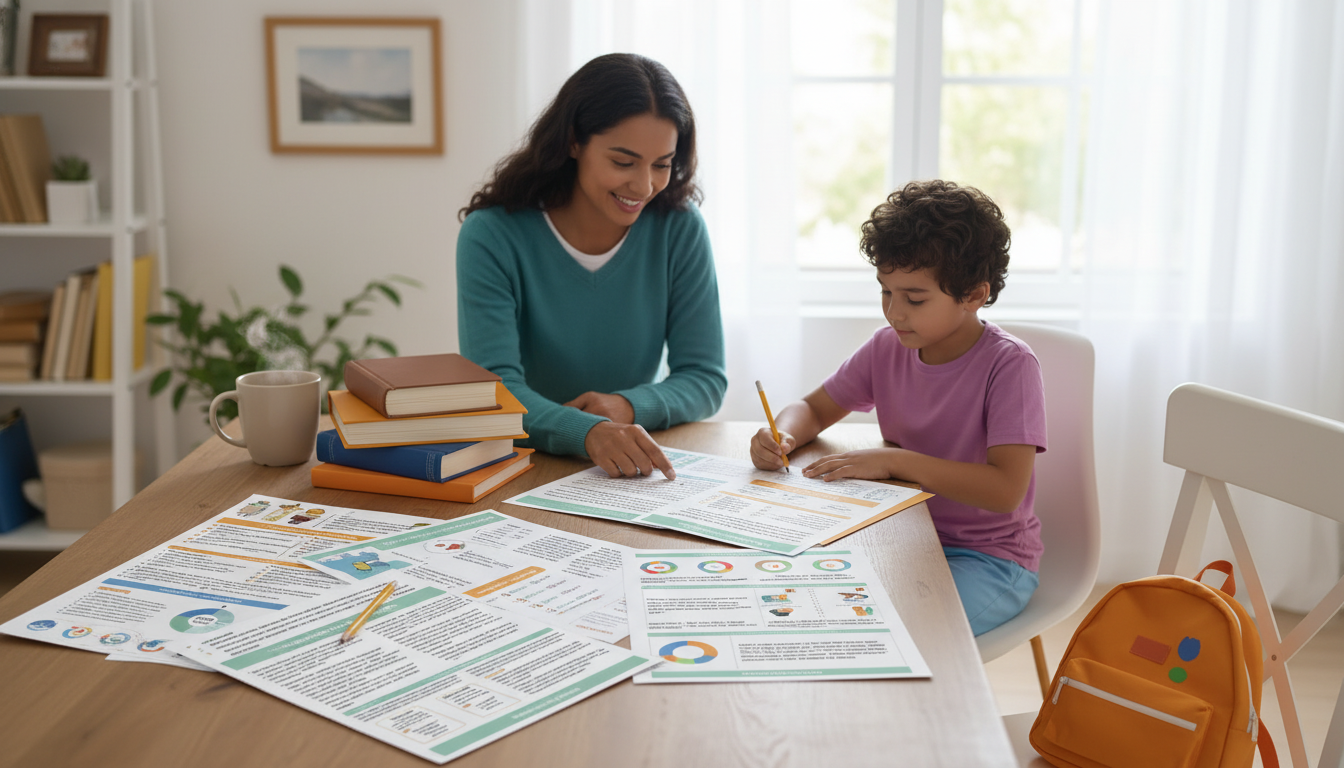
Homework Help Made Easy: A Parent Toolkit to Build Study Habits and Independent Learners
A consistent homework routine can lower stress, reduce nightly battles, and teach skills that carry into every subject. The most helpful approach isn’t tighter supervision—it’s a repeatable system that teaches kids how to plan, start, focus, and finish with less hands-on help over time. The steps below are designed to keep responsibility with the student while giving parents a clear, calm way to coach.
What makes homework stressful (and what actually helps)
Most homework blowups come from a few predictable friction points: unclear directions, low stamina after a long school day, distractions (especially phones), perfectionism, and task avoidance. When those stack up, parents often default to hovering, reminding, or correcting—yet that can create power struggles and make kids feel even less capable.
A better goal is shifting from “getting it done” to building repeatable skills: planning, persistence, self-checking, and asking for help appropriately. Small environment and routine changes often beat longer sit-downs or tighter supervision. Research-backed study guidance from sources like the American Psychological Association and strategy collections from Edutopia highlight the same theme: structure plus student ownership is more sustainable than nightly rescues.
One of the biggest “secret weapons” is a predictable parent script. When your words stay calm and consistent, kids can’t pull you into a debate as easily—and the work stays their responsibility.
Set up a homework space that supports focus
Pick one primary homework spot and make it boring-in-a-good-way. The goal is fewer decisions and fewer excuses. Keep core materials close: pencils, paper, charger, calculator, and headphones if allowed by the teacher. Store them in one bin so setup takes seconds.
Minimize visual noise by clearing the surface and keeping only the current task visible. If a child sees three textbooks, an art project, and yesterday’s math packet, the brain reads it as “too much.”
Decide device rules before the first assignment starts. A simple default: phone parked in another room, notifications off, and only required tabs/apps open. If your child needs a device for schoolwork, set a single purpose for that device (research, typing, or the class portal) and close everything else.
Finally, reduce stalling with a cue that becomes automatic: snack → bathroom → set timer → start. When kids know what comes next, they start arguing less and initiating more.
A routine that builds habits in 10–15 minutes a day
Habits form through consistency, not marathon homework sessions. A quick daily routine—done at roughly the same time on most school days—teaches kids how to launch work independently.
The “launch sequence” (2–3 minutes)
- Check assignments (planner, class portal, or notebook).
- Estimate time for each task (rough is fine).
- Choose the first task (start with easiest or most urgent).
- Gather materials.
- Set a timer.
Work blocks (the middle)
Use short work blocks with quick resets: water, stretch, a 2-minute tidy, then back to work. Short blocks protect focus and reduce dread. If attention is a challenge, consider supports related to executive function from resources like Understood.
End-of-session wrap (2 minutes)
How the printable toolkit fits into nightly homework
Keep the pages visible and easy to grab—binder sleeve, clipboard, or a dedicated folder works well. For a ready-to-use set, use Homework Help Made Easy Toolkit for Parents – Printable Guide for Creating Study Habits, Homework Strategies & Independent Learning.
If the whole household is tense at homework time, pairing the routine with a quick reset can help everyone start calmer. Two options that fit well before the “launch sequence” are 5-Minute Reset for Exhausted Parents (3 in 1) | Audio Course | Mindfulness Breathing, Emotional Reset & Energy Boost and Break the Tension: Stress Relief Techniques – Breathing Exercises, Quick Meditations, Grounding Techniques, and Time Management Tips to Reduce Stress.
Homework strategies by age: what to expect and what to teach
| Grade band | Best routine focus | Parent support level | Independence skill to practice |
|---|---|---|---|
| K–5 | Start fast, short work blocks, simple checklist | High at first; sit nearby, not over the shoulder | Read directions, self-check basics (name/date, answered all parts) |
| 6–8 | Prioritize, estimate time, handle multiple subjects | Moderate; plan together, then step back | Break tasks into steps, ask specific questions when stuck |
| 9–12 | Plan backward, manage big assignments, study cycles | Low; review plan and outcomes weekly | Create study schedules, evaluate what worked, adjust strategy |
Coaching language that increases independence (without doing the work)
Common homework roadblocks and simple fixes
A weekly reset that keeps homework from piling up
FAQ
How long should homework take each night?
A practical guideline is about 10–20 minutes in early elementary, 30–60 minutes in upper elementary and middle school, and 60–120 minutes in high school, but it varies by teacher and student needs. If your child regularly exceeds a reasonable window, use timeboxing and message the teacher with specifics about what’s taking so long.
How can a parent help without doing the homework?
Focus on prompting rather than telling: ask for the first step, have your child show directions, and use a checklist or plan to keep them moving. Try the “5-minute try” rule and then review for completeness (answered all parts, showed work, followed the rubric) without correcting every answer.
What if a child refuses to start homework?
Use a calm start routine, offer a tiny first step (one problem or one sentence), and give limited choices like which subject first or where to sit. Set a short timer (5–10 minutes) to lower resistance, then make a simple follow-up plan if avoidance keeps happening (consistent start time, teacher check-in, or adjusted workload supports).









Leave a comment