Printable Indoor Cat Enrichment Plan: Toys, Play, Home
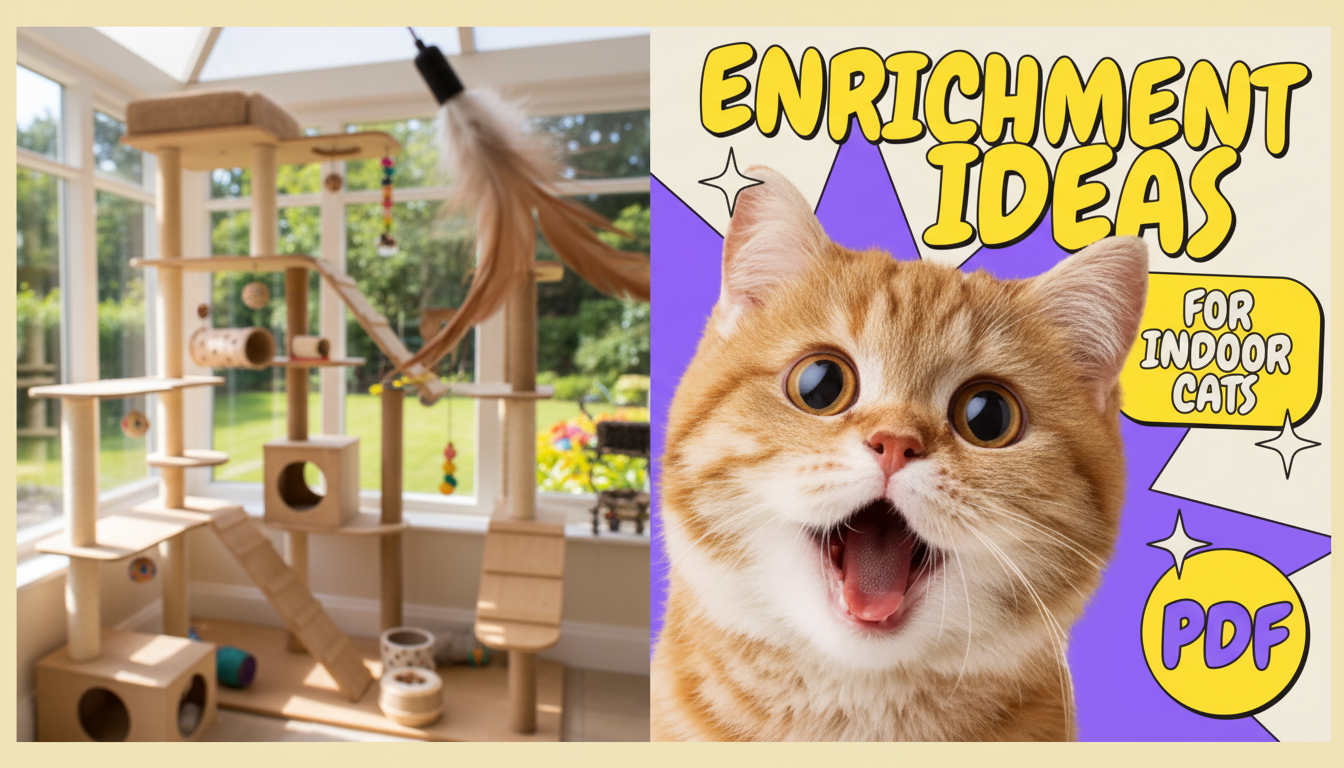
Printable Enrichment Plan for Indoor Cats: DIY Toys, Play Routines, and a Cat-Friendly Home
Indoor cats thrive when their days include hunting-style play, problem-solving, and cozy recovery time. A simple enrichment plan can reduce boredom behaviors like yowling, scratching furniture, or nighttime zoomies by giving cats predictable outlets for energy and curiosity. Below is a practical, mix-and-match guide with DIY toy ideas, daily routines, and home tweaks that support confident, content indoor cats—plus a printable plan to keep it consistent.
What Indoor Cats Need: The 5 Pillars of Enrichment
A well-rounded plan doesn’t rely on one “magic toy.” It blends several kinds of enrichment so your cat can move, think, choose, and rest like a capable little predator.
- Movement: short bursts of chase, pounce, climb, and balance that mimic natural hunting.
- Foraging: making food and treats require a little work (puzzle feeders, scatter feeding, “hunt trails”).
- Choice and control: multiple resting spots, hideouts, and routes so the cat can opt in/out.
- Sensory variety: safe scents, textures, and sights (window viewing, rustling paper, cat-safe herbs).
- Social time: interactive play and calm bonding on the cat’s terms (especially important for single-cat homes).
For a deeper look at what cats need from their environment, see the American Association of Feline Practitioners (AAFP) Feline Environmental Needs Guidelines.
A Simple Daily Play Routine (Built Around the Hunt Cycle)
Most indoor cats do best with small, repeatable bursts of play that fit their natural rhythm. Instead of one long session, aim for 2–4 mini sessions per day, typically 5–12 minutes each.
- Use the hunt sequence: “stalk → chase → pounce → capture,” then offer a small meal or treat to complete the cycle.
- Rotate toy types: wand toy one session, ball/track toy another, then a foraging activity later.
- Use consistent cues: start with the same phrase or sound, and end with an “all done” ritual (snack, brush, or calm petting) to reduce frustration.
- Adjust intensity by age: kittens need more frequent sessions; seniors often prefer gentler, slower “ground prey” play.
Sample 7-Day Indoor Cat Enrichment Schedule (Quick, Flexible)
| Day | Morning (5–10 min) | Afternoon (2–5 min) | Evening (5–12 min) | Bonus Enrichment |
|---|---|---|---|---|
| Mon | Wand toy: feather “bird” pattern near perch | Scatter feed 10–15 kibbles in 2 rooms | Ground prey: string/rope drag + treat | Open a window perch (screened) for 10 min |
| Tue | Ball track or ping-pong ball in tub | Cardboard box “doorways” maze | Laser pointer briefly, then toss a toy to “catch” + snack | Catnip/silvervine session (if cat responds) |
| Wed | DIY paper bag crinkle hunt (handles removed) | 2-minute clicker trick: touch target | Wand toy: “mouse” along baseboards | Brush or gentle massage for calm-down |
| Thu | Treat puzzle (egg carton or store-bought) | Window watch with bird video (short, supervised) | Hide-and-seek toy tosses down hallway | Rotate a new texture: towel fort or mat |
| Fri | Climb circuit: couch → cat tree → shelf | Scent trail: rub cat-safe herb on 2 toys | Wand toy: high/low alternation + snack | Short carrier “happy place” practice |
| Sat | Fetch practice (soft toy) if cat enjoys it | Freeze-dried treat “hunt” under cups | Interactive chase around obstacle course | New box + paper packing for digging |
| Sun | Slow play for seniors: lure toy on floor | Grooming or nail check with treats | Foraging: kibble in snuffle mat | Rest day: extra nap spots + quiet bonding |
DIY Enrichment Toys and Activities (Fast, Low-Cost)
DIY toys can be incredibly effective because you can tailor them to your cat’s preferred “prey” style (birdy up high, mousey on the ground, or crunchy in a bag). Always supervise new DIY items and retire anything that frays or breaks.
For a solid overview of enrichment types and why they matter, International Cat Care’s enrichment guide is a helpful reference.
Food Enrichment and Foraging Without Overfeeding
Cat-Friendly Home Tips: Turn Your Space Into a Territory
When adding scents, plants, or household items to your cat’s space, keep safety top of mind. The ASPCA’s common household dangers for cats list is a smart bookmark.
Signs the Plan Is Working (and What to Adjust)
Printable Cat Enrichment Guide: Make Consistency Easy
A routine is easier to keep when everyone in the household can see it and follow it. If you want a one-page plan you can print and reuse, start with Printable cat enrichment guide with routines, DIY ideas, and home tips. It’s designed to help you track play sessions, foraging activities, and toy rotation without guesswork.
For busy households, pairing your cat’s routine with a short human reset can make follow-through easier on hectic days. Break the Tension: Stress Relief Techniques offers simple, fast practices that fit between meetings, school runs, and play sessions.
FAQ
How much play does an indoor cat need each day?
Many indoor cats do well with about 15–40 minutes total per day, split into short sessions. Aim for hunt-cycle play (stalk, chase, pounce), then offer a small meal or treat to help your cat settle.
Are DIY toys safe for cats?
They can be safe with supervision and the right materials. Avoid leaving strings unattended, skip staples and toxic glues, and replace DIY toys when they start to fray or shed small pieces.
What are easy enrichment ideas for cats who don’t like toys?
Try food puzzles, lick mats, scent enrichment, window perches, and cardboard hideouts. Many cats also respond better to slow “ground prey” play and playing at dawn or dusk rather than mid-day.










Leave a comment