Safe Space Mapping: Build Your Support Plan
Safe space mapping is a practical way to identify where support, comfort, and boundaries can be found—at home, at work, online, and in the community. It turns a vague hope (“I’ll figure it out when I’m stressed”) into a clear plan you can actually use for everyday decisions, difficult conversations, and moments when emotions run high.
What “safe space” means in real life
A safe space is a setting where expectations are clear, respect is practiced, and harm is actively reduced. It’s not a promise that nothing uncomfortable will ever happen—hard topics, disagreement, and strong emotions can still show up. What makes a space “safer” is the presence of consent, privacy boundaries, inclusive language, and predictable consequences when those agreements are broken.
Safety can be emotional, social, physical, and digital, and each type may require different standards depending on the situation. Some safe spaces are temporary (a moment of calm in a conversation), while others are ongoing (a room you reset daily, a moderated community, a weekly group).
Types of safety to map
| Type | What it protects | Examples to include on a map |
|---|---|---|
| Emotional | Feelings, dignity, sense of belonging | A trusted friend, a support group, a calm corner at home |
| Physical | Body, personal space, mobility and access | Well-lit routes, accessible buildings, a safe ride option |
| Social | Reputation, relationships, power dynamics | Allies at work, mentors, community leaders |
| Digital | Privacy, identity, data and harassment protection | Private accounts, block/mute lists, secure messaging, moderation rules |
Why mapping helps when emotions run high
When stress spikes, the brain tends to narrow options, miss details, and default to old patterns. A safe space map reduces decision fatigue by pre-identifying where to go and who to contact. It also highlights gaps—no quiet place, no supportive contact, weak online boundaries—so you can address them before a crisis.
Mapping supports boundary-setting by clarifying what is acceptable in each space and what happens if it’s violated. It can also make needs visible in families, teams, and communities, turning “I don’t feel safe” into actionable specifics: what behaviors need to change, what topics need consent, and what the next step is if agreements aren’t honored.
How to build a safe space map step by step
Keep this simple. The best map is the one you’ll actually use—on one page, in a notes app, or as a printable you can revisit.
- Start with an inventory: list places, people, routines, and online spaces that feel supportive or neutral.
- Add conditions: what makes it safer (time of day, who is present, rules, privacy, sensory environment).
- Rate reliability: “steady,” “situational,” or “uncertain,” based on your lived experience—not wishful thinking.
- Add an exit plan: how to leave a conversation, room, event, or online thread without escalating.
- Update routinely: a monthly check-in keeps the map accurate as relationships and environments change.
Safe space mapping worksheet fields
| Map item | Conditions for safety | Signals it’s becoming unsafe | Exit/repair plan |
|---|---|---|---|
| Friend or ally | Confidential, nonjudgmental, available after 6pm | Dismissive comments, shares private info | Pause topic, restate boundary, end call if repeated |
| Room at home | Door closes, low noise, comfort objects | Interruptions, overstimulation | Headphones, sign on door, short reset break |
| Online community | Clear moderation rules, ability to mute/block | Dogpiling, doxxing threats, repeated boundary crossing | Report, leave thread, tighten privacy, document if needed |
Creating safer spaces: practical agreements and boundaries
Safer spaces are built through agreements you can observe in practice. Start by setting shared expectations: confidentiality limits, respectful language, turn-taking, and consent before sensitive topics (especially anything involving trauma, identity, finances, health, or relationships).
- Design for accessibility: consider sensory needs (noise, lighting), seating options, clear navigation, and inclusive scheduling.
- Make boundaries visible: posted group rules, pinned messages, code words for “pause,” and clear facilitation roles.
- Plan for repair: decide how to apologize, how to pause, and how to re-enter after harm—without forcing immediate reconciliation.
- Avoid performative safety: rules without accountability, vague promises, or tolerance of repeated harm erodes trust quickly.
For confidentiality questions in helping relationships, the American Psychological Association’s overview of privacy and confidentiality can help set realistic expectations, especially when professional support is involved: https://www.apa.org/topics/psychotherapy/understanding.
Using your map in everyday scenarios
For broader safety planning frameworks, these resources offer practical, step-by-step guidance: RAINN safety planning and National Domestic Violence Hotline safety planning.
Common mistakes and how to avoid them
A printable, guided approach
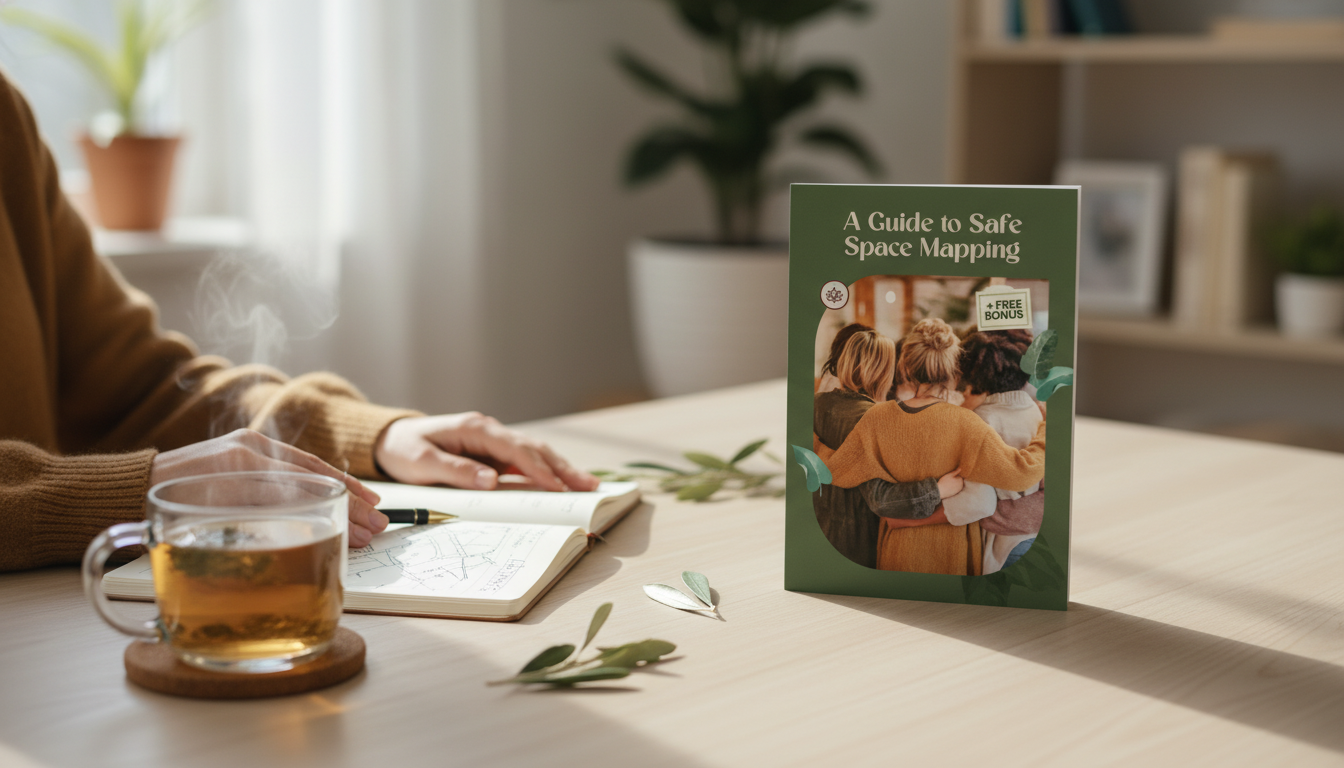
If a blank page feels hard to start, a structured resource can make mapping repeatable. Use A Guide to Safe Space Mapping | Digital Ebook on Understanding, Creating & Using Safe Spaces for prompts, examples, and a step-by-step method that works for individuals, facilitators, educators, and support groups.
Pair mapping with quick regulation tools so the plan stays usable under pressure. Break the Tension: Stress Relief Techniques – Breathing Exercises, Quick Meditations, Grounding Techniques, and Time Management Tips to Reduce Stress can help you build short routines that fit naturally into “exit plans” and post-stress recovery. For caregivers juggling constant demands, 5-Minute Reset for Exhausted Parents (3 in 1) | Audio Course | Mindfulness Breathing, Emotional Reset & Energy Boost offers a fast, guided way to downshift when there’s no time for a long break.
FAQ
Are safe spaces meant to avoid disagreement?
No. Safer spaces can include disagreement; the focus is on a respectful process with consent, clear boundaries, and accountability if those boundaries are crossed.
How often should a safe space map be updated?
Update it after major life changes (moves, job shifts, relationship changes) and do a monthly or quarterly review so reliability ratings and support options stay accurate.
What should be included in a digital safe space map?
Include privacy settings, block/mute/report steps, trusted contacts, platform-specific moderation tools, and a simple documentation plan for harassment (what to save, where to store it, and when to escalate).










Leave a comment